


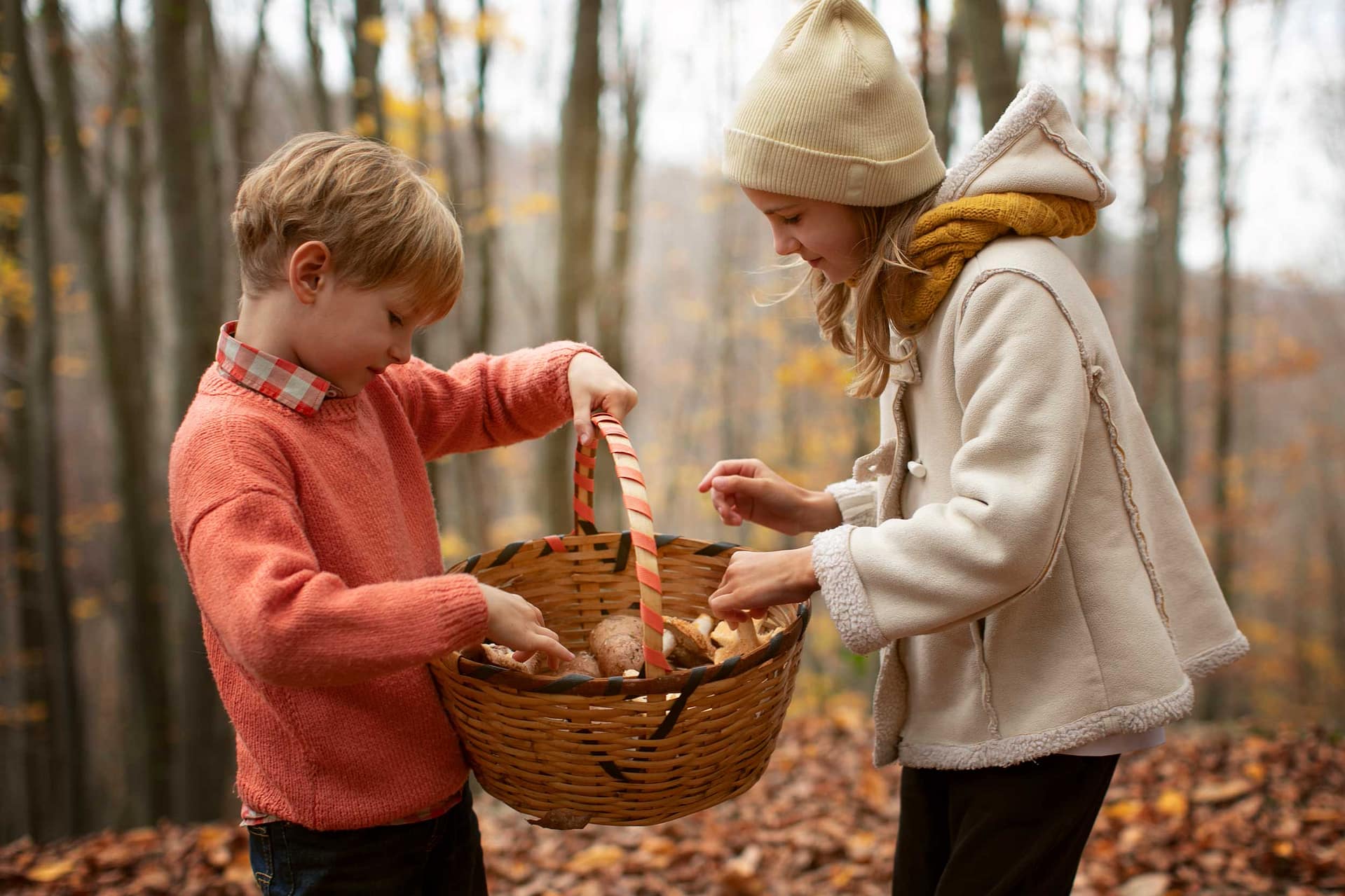
Starting mushroom picking can feel intimidating. Between toxic species, possible confusion, and rules to follow, many people hesitate to begin. However, there are several edible mushrooms that are easy to identify and perfectly suited for beginners.
The goal is not to know everything, but to focus on a few clearly recognizable species. By learning just four or five simple mushrooms, you can already enjoy your time in the forest safely and with confidence.
Here are five ideal species to start with in Switzerland, along with clear tips to recognize them and avoid mistakes.
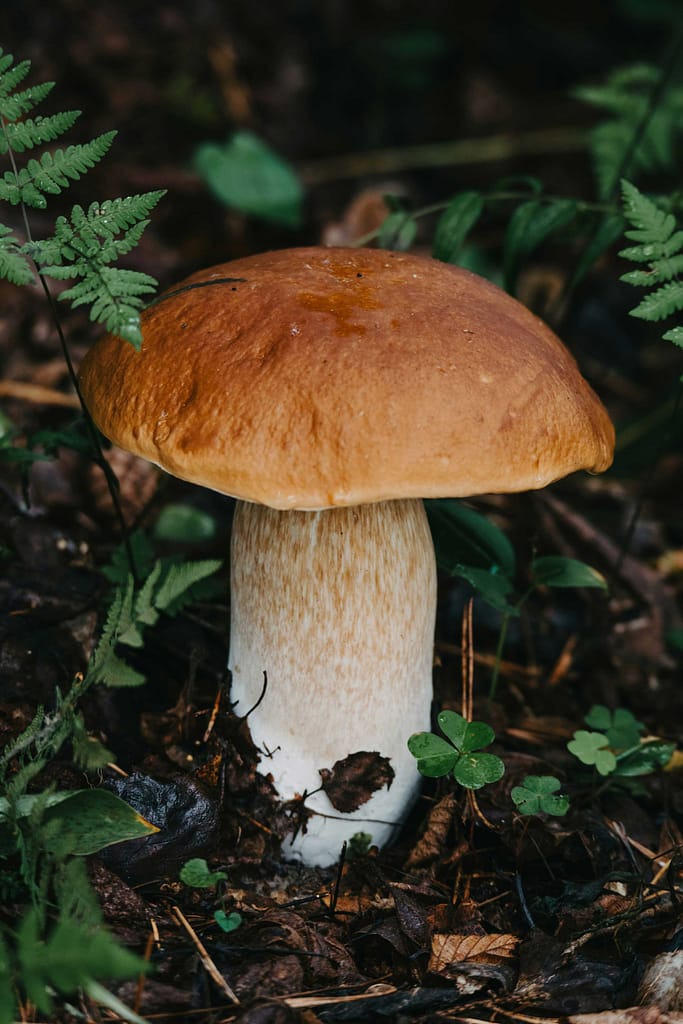
Porcini (Cèpe de Bordeaux)
he porcini is undoubtedly one of the most sought-after mushrooms, and also one of the most accessible for beginners.
It can be recognized by its brown cap, often smooth and slightly domed, and its thick, bulbous stem, pale in color with a light white network pattern. Under the cap, there are no gills but a white sponge-like layer that turns yellowish with age.
It is mainly found in forests, under deciduous trees like oaks or beeches, but also under some conifers. It often appears after periods of rain followed by mild weather.
What makes it ideal for beginners is that there are few truly dangerous look-alikes. Some boletes may resemble it, but they are usually bitter or not commonly eaten, and not deadly. However, red-pored boletes should be avoided, as they do not match the characteristics of porcini.
Chanterelle
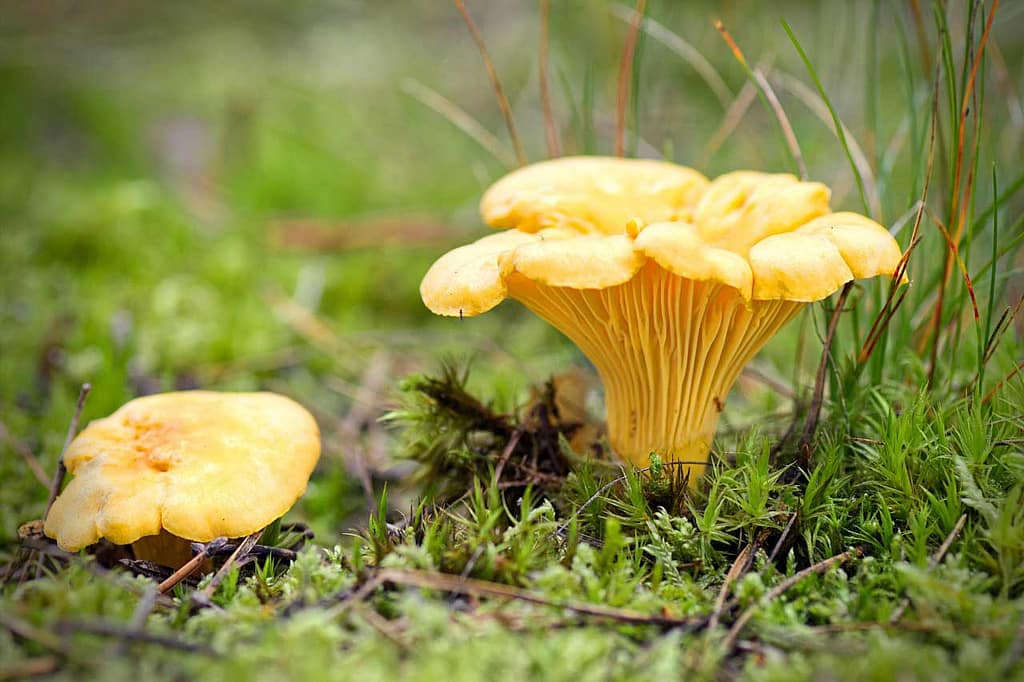
The chanterelle is another excellent choice for beginners. It is appreciated for its flavor and its relatively easy identification.
It has a yellow to orange cap, funnel-shaped, with often wavy edges. Instead of classic gills, it has thick, widely spaced ridges that run slightly down the stem.
It grows in both deciduous and coniferous forests, often in groups, sometimes in large quantities. It typically appears in summer and autumn.
The main possible confusion is with the false chanterelle, which is less flavorful but not dangerous. The false chanterelle has thin, tightly packed gills, unlike the thick ridges of the real chanterelle. Taking the time to observe this detail greatly reduces the risk of error.
Field Mushroom (Rosé des prés)
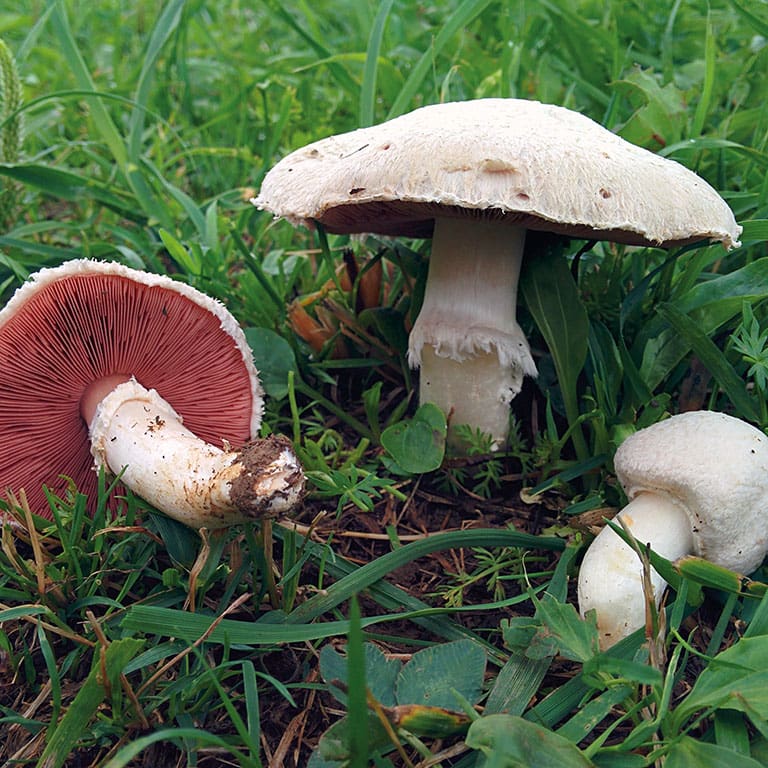
The field mushroom grows in meadows, pastures, and gardens. It is a mushroom that can be found outside forests, making it particularly interesting for varying picking locations.
It resembles the common button mushroom, with a white cap and gills that change from pink to dark brown over time. Its smell is generally pleasant, slightly reminiscent of anise.
Caution is important, as some toxic white amanitas can be confused with it. The main difference lies in the gills, which remain white in dangerous species. Additionally, the field mushroom does not have a volva (a sac-like structure at the base of the stem), unlike some amanitas.
It is a good mushroom for beginners, provided these criteria are carefully checked.
Hedgehog Mushroom (Pied-de-mouton)
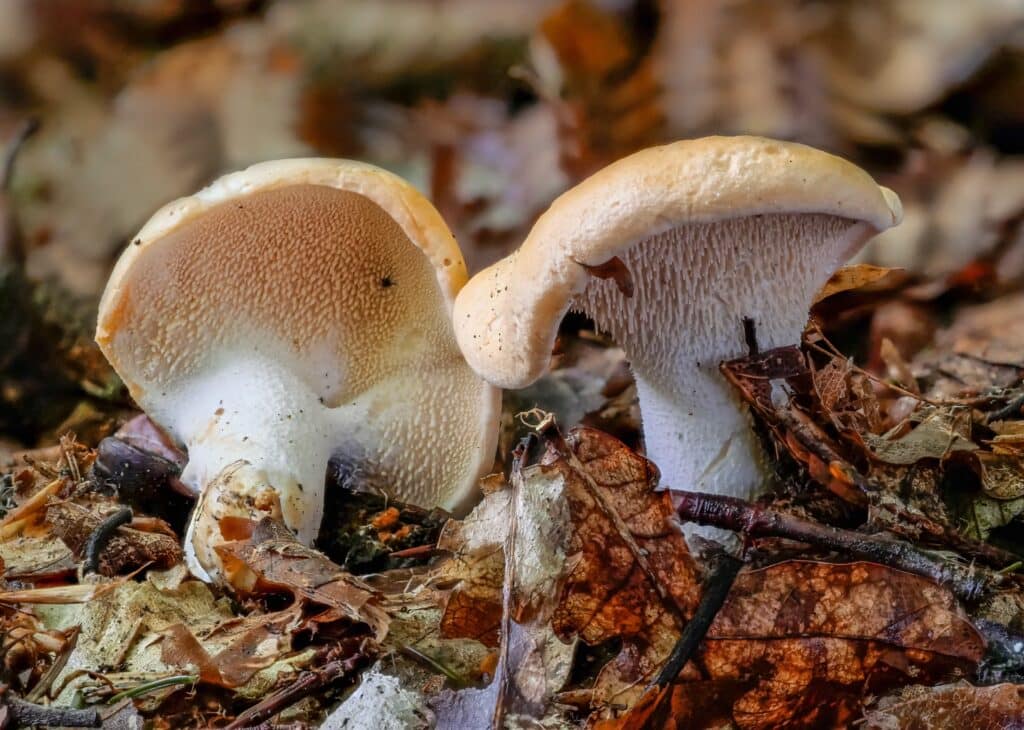
The hedgehog mushroom is often recommended for beginners because it is very easy to recognize.
Its cap is beige to orange, sometimes irregular, and its distinctive feature is found underneath: instead of gills, it has small spines (like teeth) that run down the stem.
It grows in forests, often in groups, during autumn. It is quite sturdy and keeps well after picking.
There are very few dangerous look-alikes, which makes it an excellent choice for beginners. Its unusual appearance makes it easy to identify, even for an untrained eye.
Parasol Mushroom (Coulemelle)
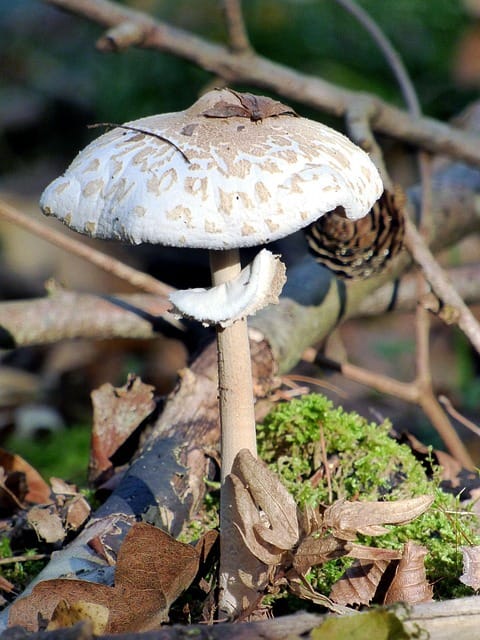
The parasol mushroom is a large and very distinctive mushroom, often impressive because of its size.
Its cap is wide, light brown with darker scales, and opens like a parasol when mature. Its stem is long and slender, with a movable ring and a snakeskin-like pattern.
It can be found in meadows, forest edges, and clearings. It often grows in groups, sometimes forming rings.
The main confusion is with certain toxic lepiotas, but these are generally much smaller. The size of the parasol mushroom is therefore an important identifying feature. Its slender stem and overall appearance also make it relatively easy to distinguish.
Essential Tips for Getting Started
Even with species considered easy to identify, a few simple rules help avoid mistakes:
Only pick mushrooms you can identify with certainty
Observe several characteristics (cap, stem, underside, smell)
Avoid specimens that are too young or damaged
If in doubt, do not consume
Have your harvest checked by a specialist if unsure
Limiting yourself to a few species at the beginning is the best approach. It allows you to learn gradually, without spreading yourself too thin or taking unnecessary risks.
Conclusion
Mushroom picking becomes much more accessible when you focus on simple and easily recognizable species. Porcini, chanterelles, field mushrooms, hedgehog mushrooms, and parasol mushrooms provide an excellent foundation for beginners in Switzerland.
With a bit of observation and caution, these mushrooms help build confidence and allow you to fully enjoy time spent in nature. The key is to progress step by step, always prioritizing safety over the quantity collected.
No responses yet