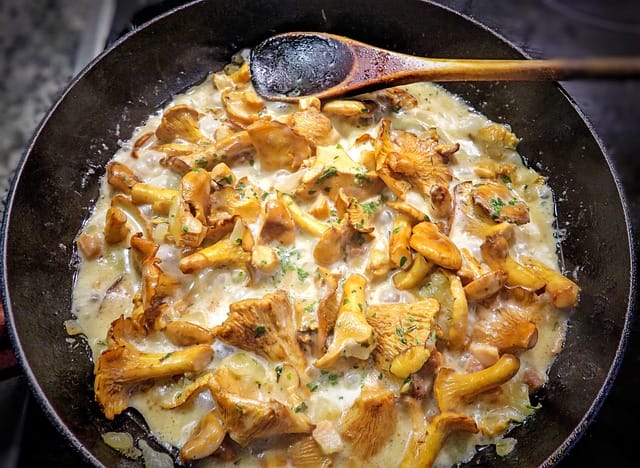


The chanterelle mushroom: an edible mushroom that is easy to recognise
The chanterelle edible mushroom
Chanterelles are edible mushrooms that are very popular with beginners because they are relatively easy to recognise and often grow in large quantities. They are an excellent species for a first foraging trip with children, provided that a few simple rules of observation and caution are followed.
Description of the chanterelle mushroom
Comment reconnaître facilement une chanterelle
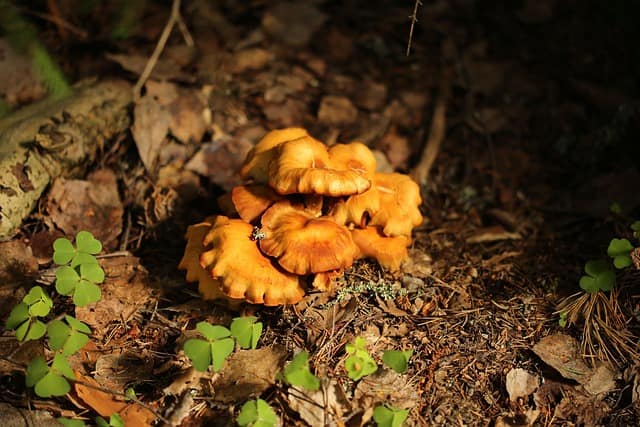
The chanterelle is a medium-sized mushroom, elegant and easily recognisable once you learn to spot its characteristic shape. It is known for its warm colour and slightly wavy appearance, which makes it easier to identify than many other mushrooms.
To recognise a chanterelle mushroom without making a mistake, you need to look for a few key characteristics: the cap is wavy, never perfectly round, the folds are thick and not sharp, the colour is uniform, without any marked contrast, and the stem is solid, never hollow.
Tip for parents: teach children to observe without touching until you have confirmed the identification of the mushroom.
size
- Height: approximately 5 to 10 cm
- Cap width: 3 to 8 cm
colour
- Light yellow to golden yellow
- Uniform colour across the entire mushroom
Lamellae (or folds)
- No real thin lamellae
- Thick, rounded and spaced folds
- The folds descend slightly along the foot
smell
- Odeur douce et agréable
- Parfois légèrement fruitée, rappelant l’abricot
Where to find chanterelles in the wild
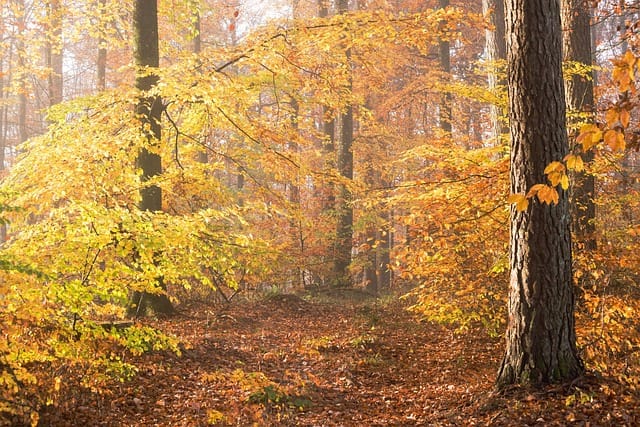
Chanterelles thrive in very specific natural environments: deciduous or mixed forests, slightly damp soil, often near oak, beech or conifer trees, and areas that are not heavily trodden. They do not grow directly on wood, but in the soil, often hidden under dead leaves.
How chanterelles grow
Chanterelles grow in small groups, sometimes quite densely, and rarely alone. They are usually spread out over a specific area rather than randomly, which means that when you find one, there is a good chance that there will be others nearby.
Simple techniques to find more
Here are some techniques suitable for beginners and family outings:
- Move slowly.
- Kneel down to observe the ground.
- Gently move aside dead leaves with a stick.
- Search the area around the first chanterelle mushroom.
- Take the time to observe shapes and colours.
How to pick chanterelles correctly
For respectful picking:
- Cut the stem cleanly with a knife.
- Only pick mushrooms that are a reasonable size.
- Leave the smaller ones to grow for your next outing.
- Use a basket or cloth bag (never a plastic bag).
How to clean chanterelles
- Clean them dry with a brush.
- Avoid soaking them in water.
- Cut off the base of the stem if it is muddy.
- Clean just before cooking.
Simple meal idea with chanterelle mushrooms
Easy pan-fried chanterelles
- Chanterelles
- Butter or oil
- Garlic or shallots
- A little parsley
Gently fry them in a pan and serve with pasta, rice or an omelette. A simple dish that showcases the harvest and makes children proud of their efforts 🍽️